


Compression Bags vs. Vacuum Bags | What’s Better?
Recently, I’d grown frustrated with my vacuum bag situation. The misshapen blobs. The random re-inflation. Dealing with a cumbersome vacuum every time I wanted something in or out. So I went looking for an alternative and landed on “compression bags.” I’d never seen them before; but based on all the available varieties, I realized this was a trend that I was (seemingly) very late to. Today, I’m chatting all about them, why I really like them, and where I think they could work best in your home!
What’s Wrong with Vacuum Bags?
Vacuum bags have been around for a good long time. I’ve certainly used them for many years, and I remember my Mom using them too.
The concept is pretty great. Load up (a ton of) stuff into large plastic bags and then suck the air out (usually via a pump or vacuum) so that the bags (and therefore, the stuff) are a fraction of the size.
They can be a great way to store a lot of stuff in a small space, but they can also be a little frustrating too:
- The bags shrink up to really odd shapes. They are in no way flat, stackable, or uniform. Rather, they become a firm, inflexible, misshapen blob that can be difficult to store, stack, or stuff.
- Vacuum bags notoriously lose their seal. So all those bulky items you thought were tidily tucked away have actually become a big, overstuffed, loose bag that no longer fits where you put it.
- It’s really inconvenient to access things inside without disrupting the whole tight package (that is, of course, if it’s still sealed up). Removing just one item requires releasing all the suction, taking out what you need, and then dragging out the vacuum to shrink it back up.

Looking For an Alternative
For most of my life, my cedar chest has held countless handmade sweaters, dresses, hats, mittens, booties, and more, all lovingly and expertly crafted by my mother throughout my childhood.
But then as I started adding other memorabilia (e.g., my kids’ baby blankets, baptismal gowns, wedding veil, etc), the chest became more and more difficult to not only dig through but even just close! (Hence the use of vacuum bags!)
When we recently decided to give the old chest a fresh new makeover (see it: (Finally) Making Over Our Vintage Cedar Chest), I also went on a hunt for a better way to store the precious items inside.

What Are Compression Bags
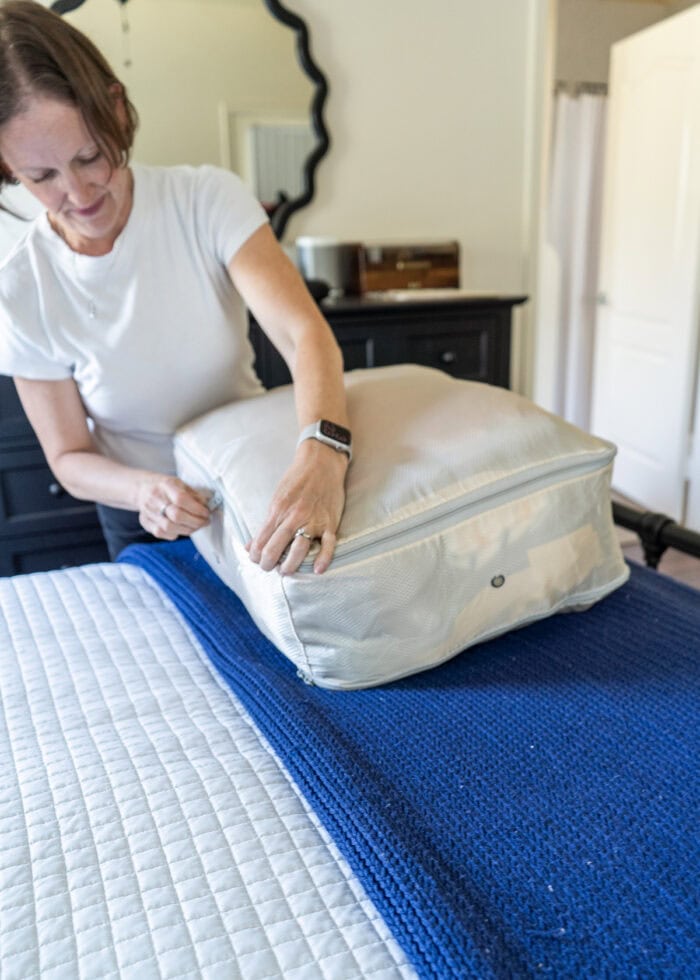
Compression bags, like vacuum bags, are designed to help you store a lot of stuff in a smaller footprint by removing air from inside the sack.
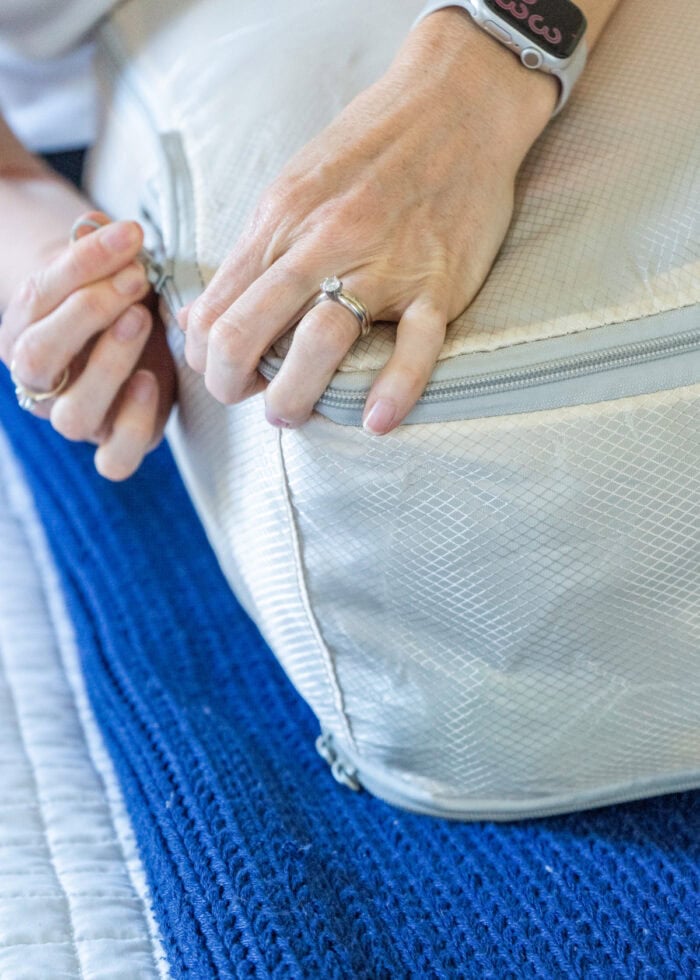
But instead of using a vacuum, compression sacks use a series of zippers to compress the whole bag down, making it smaller with each zipper you close.
Want to save this post?
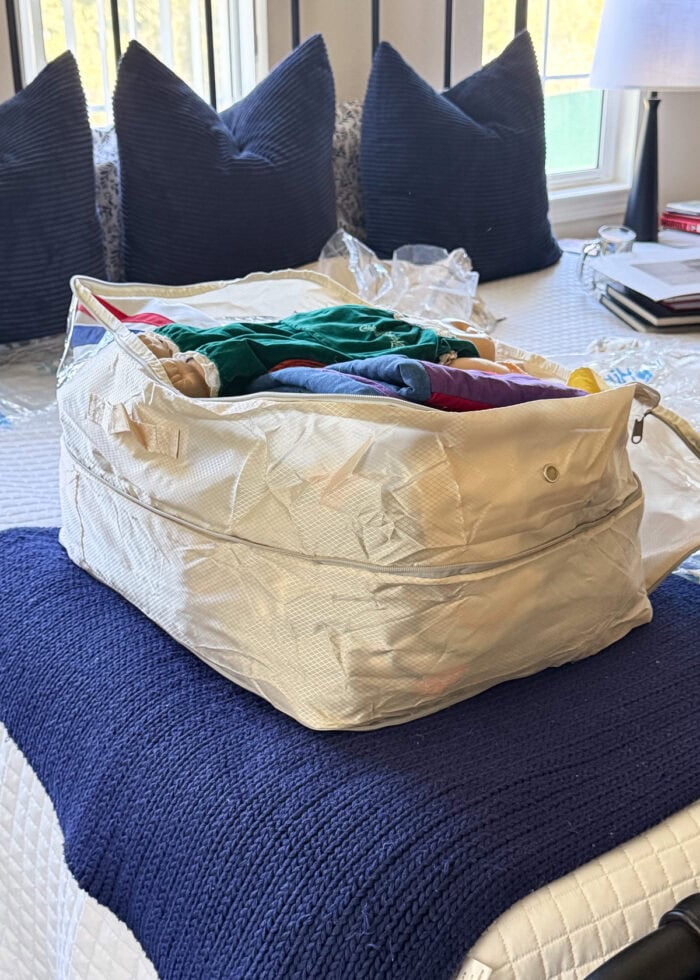
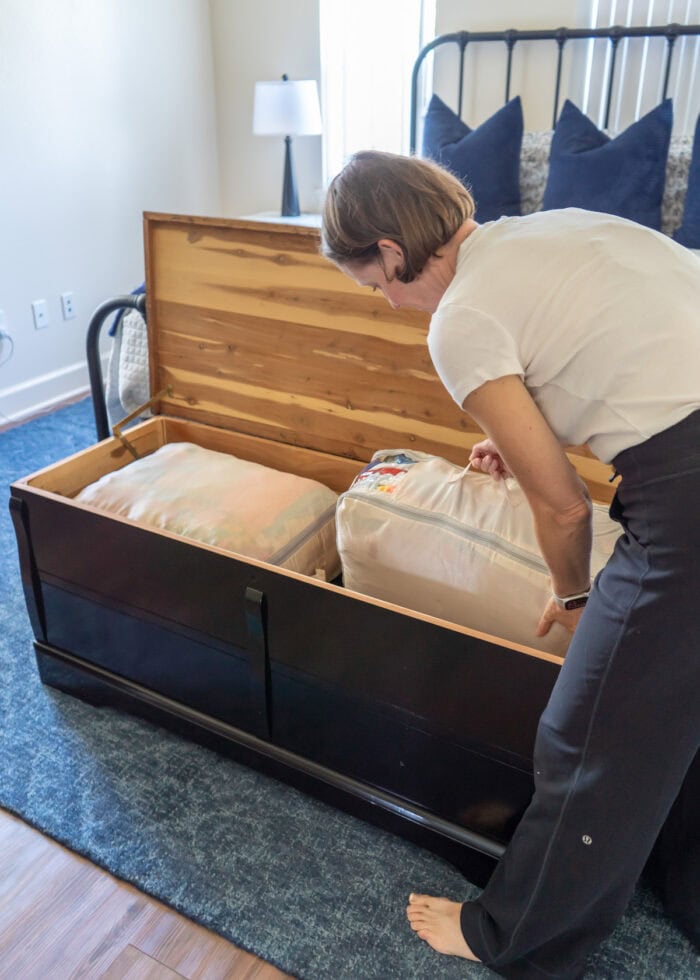
Here is my compression sack as I filled it all the way to the top. It stood about 12” tall.
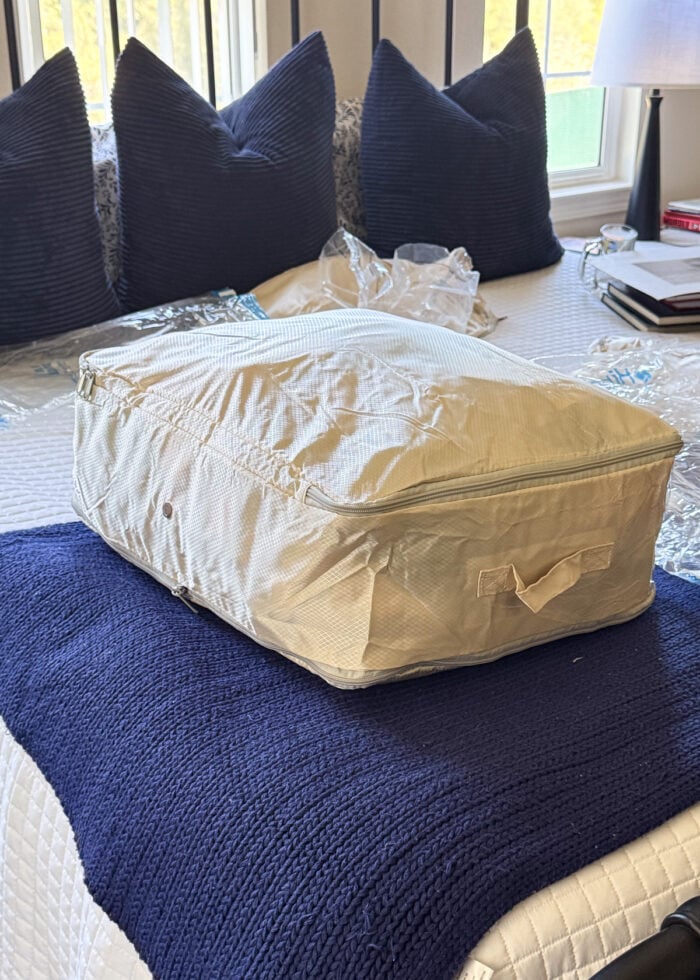
Once I closed up all the zippers, it became about half its height. No vacuums, no seals. Just zippers.
What I Love Most About Compression Bags
Very rarely do I come across a product that makes me giddy, but this one did. It’s pretty gratifying to watch them shrink down, and I immediately saw them as a way to mitigate all the issues I was having with vacuum bags.
Specifically:
- No vacuum required. Full stop.
- Easier in/out. Because the vacuum isn’t required, opening up the bags to get items in/out isn’t nearly as much of a nuisance, so I’m more inclined to do it.
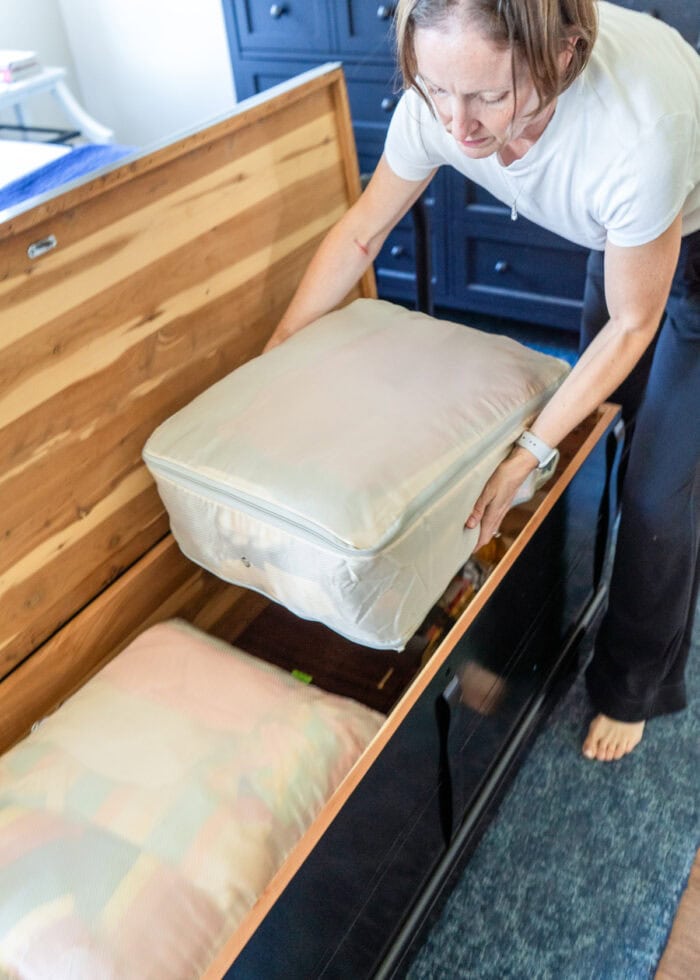
- The sacks maintain a cube shape. Yes, the bags become a bit more rounded when compressed (depending on how full you stuff them). But their overall solid, symmetrical shape makes them so much easier to stack or stand under beds, on closet shelves, inside drawers or chests, inside tubs, etc.
- No failing suction. Because the compression is achieved via zippers and one-way air valves, there is no “suction” that will pop and release over time. Once these bags are zipped up, you can take comfort in knowing they will stay that way…until you unzip them again.
How Small Can They Go?
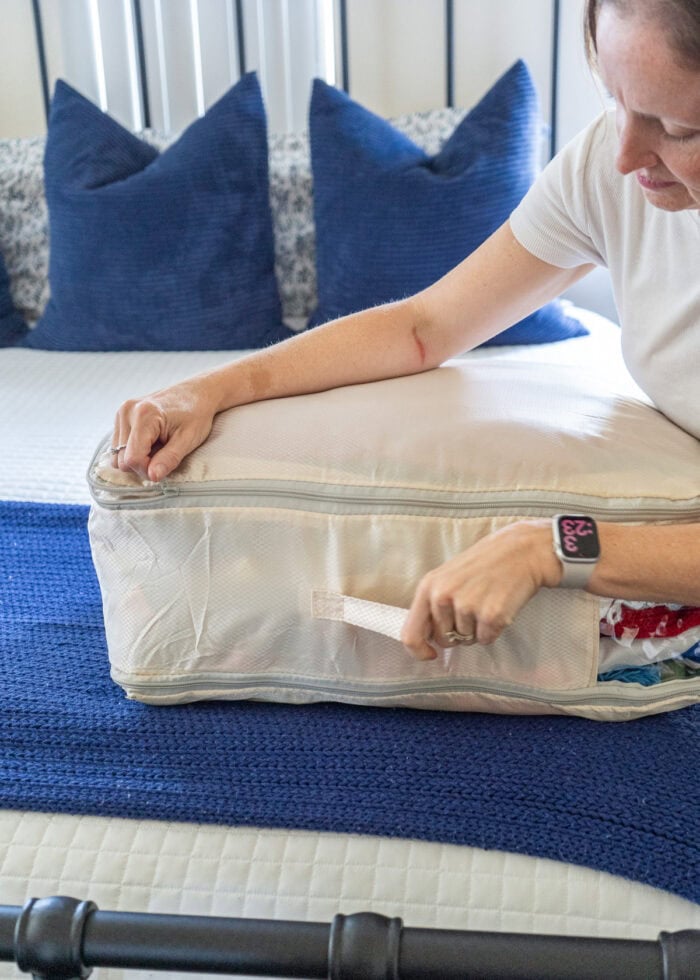
I think the one “down side” of compression bags over vacuum bags is how small/tight you can get them. I was really impressed with how much I could fit into the loose sack. But with only 2 zippers to cinch down, I suspect there was more air that could/would have come out with a vacuum.
That said, I got about 10 vacuum bags (size small) worth of sweaters/hats/mittens/dresses (as well as some dolls and other childhood items) into two large sacks that fit so nicely into my cedar chest. I can easily get the sacks in/out, remove items if needed, and close them back up with minimal effort.
I’m so sold that I’m now looking for other things we can use them for in our home! Pretty sure the linen closet is up next!
Dive Deeper Into This Post
In this week’s Voice Notes, I’m sharing a few more specifics. Specifically: how I chose the compression bags I did and how hard they really are to zipper shut!
Megan



5 Comments on “Compression Bags vs. Vacuum Bags | What’s Better?”
Who knew??! Thanks for this tip – I’ll be on the lookout 🙂
I’ve been waiting for this post since you teased it last week. And you did the exact thing I needed to look into. My cedar chest is full of stuff. Probably time to just keep the good stuff. But getting it in there and stored in a way that won’t ruin the fabric? This is perfect. I always worry that vacuum sealing stuff will ruin the fabric inside. So this sounds better. Allowing the fabric to still breathe.
Do you label them? I don’t like that you can’t really see what’s inside easily, whereas you can with the clear vacuum bags. I’m surprised you didn’t mention this, so maybe you can easily see but I couldn’t tell from pics or the Amazon page?
Hi Michelle,
The bags do have two “peek a boo” windows on the sides/corners. And they came with labels, but I didn’t personally use them because the contents of my two bags aren’t all that distinct.
Hope that helps!
Megan
This would be a really great solution to storing extra bedding for our air mattress so it’s easier to put it on the shelf and lots of other extra linens we don’t use often unless we have company. Excited to give these a try!