

Coffee Break #61
Over the last few years, I lost count at how many times a home blogger or financial blogger or mom blogger I followed would veer, uninvited, into the diet/health/weightloss sphere. “Stay in your lane!” I’d shout into my phone. “You’re no expert, how dare you be giving health advice!” My heckles would raise, and I’d vow to never (ever ever) do the same.
And yet, here I am hitting pause on my usual DIY content to share why and how I lost weight during my time away from the blog. I never planned on writing this post. But I’ve had so many people, both in person and here on the blog, ask how I did it. So I thought it would, in fact, be helpful (and perhaps even inspirational?) to share the strategies and resources that enabled me to lose 20+ pounds over the last year.
To be very clear, this is no way intended to be medical or nutritional advice. I am not a doctor or a registered dietician. Before changing your diet or exercise regimen, please consult a medical professional first.
Getting a Grip
At 43 years old, I found myself 10-15 pounds above my “usual” baseline.
For well over a year, I told myself my clothes were just shrinking from repeated washes. Or this was “just how it is” once you’re over 40.
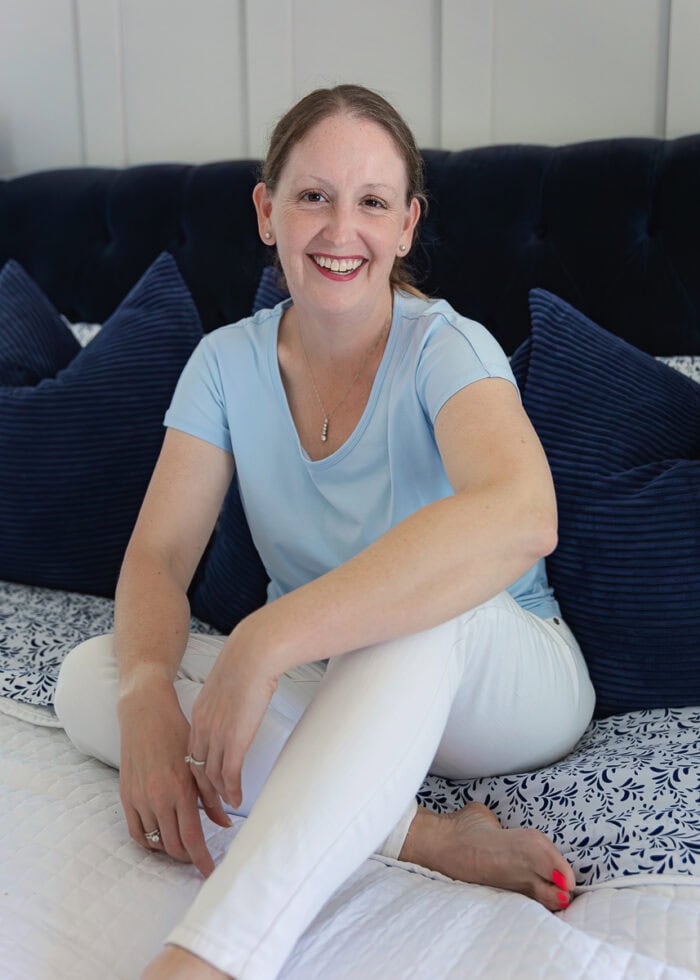
But after buying a (practically whole) new wardrobe so that I could feel good in clothes again, I kind of had an “epiphany.”
Although I feel “old,” I decided I was actually way too young to spend the rest of my life heavier than I wanted to be. I wasn’t ready to just throw my hands up to the sky and say “Oh well, this weight is my new normal.”
So after acknowledging that I had indeed gained more weight than I wanted to admit AND face the fact that my “usual” weight control methods were no longer working, I decided to start paying attention to the diet/exercise/weight loss chatter happening all around me.
The “P” Word
The word “protein” is practically on everyone’s lips, is it not?
I’m pretty sure you’ve come across someone (or some article) that touts the benefits of a high-protein diet.
I mean…a simple stroll through Costco these days, and you’ll see it on practically EVERY piece of packaging!
I’ll be honest…I was incredibly skeptical. It felt trendy and bougie and complicated…and I’d just roll my eyes when yet another influencer/friend told me they were on a high-protein diet.
After watching this segment on the Today Show though, I got chatting with my neighbor who IS a Registered Dietician.
She explained a lot of the science behind what I perceived to be a “fad” diet, in particular the research surrounding perimenopausal (and menopausal) women. (In short, the research is sound, and a high-protein diet isn’t nearly as faddish as I assumed.)
With her “scientific blessing” (so to speak), I started to consider switching to a higher-protein diet.
But here’s the trick: you can’t just add more protein. (Yep, made that mistake!) You also need to adjust your fat and carbohydrate intake to balance out the calories you’re adding from protein.
All of a sudden I was neck-deep in the world of counting macros. And while VERY overwhelming at first, I quickly got the hang of it and (not to be dramatic), my life was forever changed.
Getting Started Counting Macros
In full transparency, I have a history of disordered eating, over-exercising, and diet compulsion.
I’ve been “free” of this obsession for almost 20 years now; but needless to say, I was VERY hesitant to start counting macros. I was worried the counting and weighing of food (which is somewhat unavoidable) would be very triggering for me.
Maybe it’s because I’m now older (and possibly wiser), but this diet way of eating is the most free I’ve ever felt. I have in no way felt triggered or obsessive, and I’m more satisfied than I’ve ever been (likely due to the higher protein consumption).
My intention was to lose 10-15 pounds. I ended up losing over 20 because this whole approach to eating is so maintainable.
I am NOT a macros expert, nor do I want to spend 3000 words trying to explain how to count macros. (I’m sure ChatGPT can do a better job for you anyway. 🙄)
But here are two resources that proved incredibly invaluable to me regarding the why and how of macro counting if you want to learn more.
- ADJENDA – After watching her segment on the Today Show, I joined Dr. Jen Ashton’s newsletter which focuses on women’s health. It’s a wealth of sound/solid information on diet, exercise (and more!) and really opened up my eyes to the existing research and resources on high-protein diets (for women in particular).
- Lillie Eats & Tells Post – I’m going to dive more into this blog further down, but I found this post helpful in understanding the basics of macros without getting too overwhelmed.
After doing some research (and fine-tuning with my RD neighbor), I landed on a balance of Carbohydrates 45% | Protein 25% | Fat 30%.
For an 1800 calorie/day diet, that equates to about 110 grams of protein/day.
How I Get 100+ Grams of Protein/Day
If I’ve heard it once, I’ve heard it countless times: “There is no way I can get 100 grams of protein in a day.”
And my answer: “It’s not nearly as hard as you think it is.”
I personally aim for 30 grams at each meal (breakfast, lunch, dinner). Then I add a morning and afternoon snack, each around 10-15 grams and bamm….120 grams of protein.
The key is finding meals that add up to around 30 grams of protein (breakfast is definitely the hardest!) while keeping carbohydrates and fat in the right ranges.
It definately takes some paper+pencil work before you can really get started, so I found this Etsy Spreadsheet and it was incredibly helpful at the start. It allowed me to plan out a variety of meals, make adjustments, and see how everything stacked up…by the meal and by the day.
I was ultimately able to come up with 3-4 breakfasts and 3-4 lunches (that were easy to make and I had no problem enjoying on repeat) that were the right balance of macros.
With breakfast and lunch set, I just needed some macro-friendly dinners, which is where Lillie Eats & Tells came in.
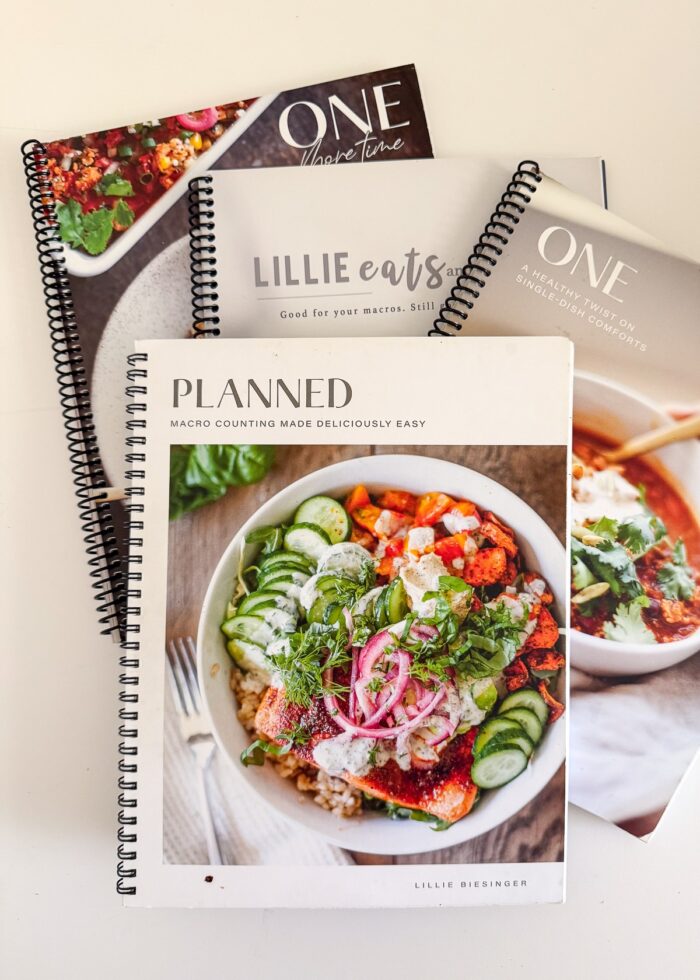
I found her blog (and her cookbooks) fairly early on in this journey. I started with her Planned Cookbook and after following it for about 6 weeks, I ordered every other cookbook she has.
Want to save this post?
Her recipes are incredibly flavorful, pretty easy to make, and rely heavily on lean protein, lots of vegetables, and whole grains. (My kids even love them.)
They are macro-balanced (so I never have to worry about them not fitting into my remaining available macros come dinner-time) and are pre-loaded into My Fitness Pal for easy logging.
We pretty much only eat her recipes now (with no complaints!)
What My Day of Eating Looks Like
- Breakfast: Overnight oats (Fairlife milk, Greek yogurt, oats, chia seeds, blueberries, peanut butter)
- Morning Snack: High-protein granola with milk
- Lunch: Turkey wrap with cheese, lettuce and mustard on tortilla with baby carrots
- Afternoon Snack: RX Bar
- Dinner: Pretty much anything by Lillie Eats & Tells
The Tools You’ll Need to Be Successful
Food Scale
You’ll notice that counting macros involves knowing how many grams of something you eat.
That’s weight, not volume.
I really didn’t want to weigh my food but quickly realized there wasn’t any way to get around it.
Funny enough, I find weighing easier than measuring and doling out portions is super quick!
I bought this scale from Target and it’s worked out great for me!
Food Prep Containers
Admittedly, lunches can be a little tricky for high-protein/macro counting because the usual sandwich doesn’t typically cut it.
I don’t have the time or bandwidth to batch meal prep on weekends, so I’ve adopted a different strategy.
I usually double our dinner recipes and package up all leftovers into extra meals for Greg and I. We can then use them for lunches or busy evenings.
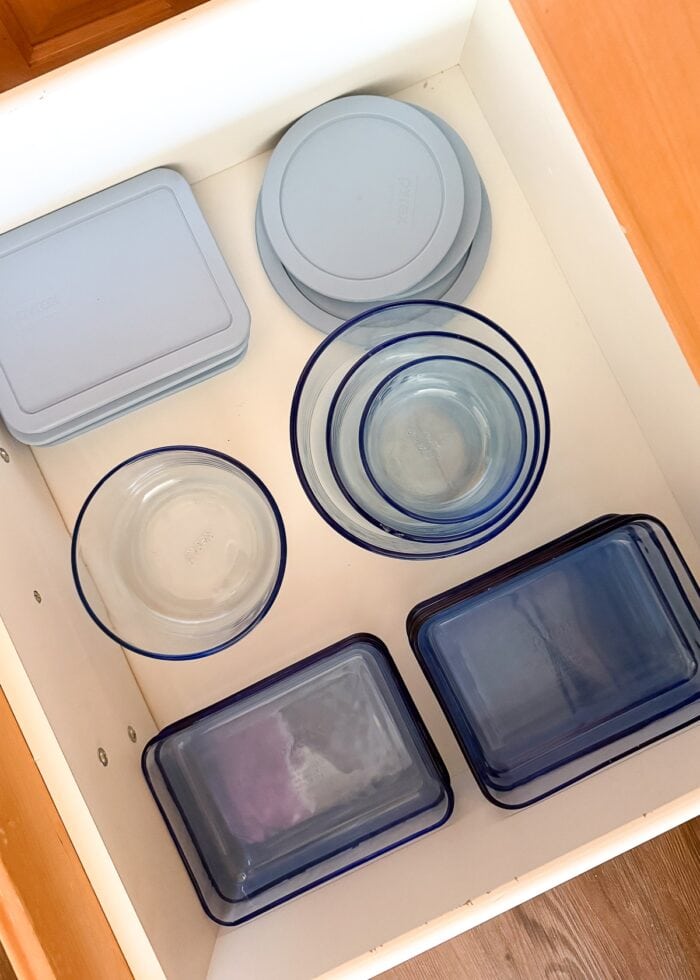
I stocked up on all new (glass) containers (round | rectangle), which hold our breakfasts and lunches just right (and they are so pretty too!)
Bathroom Scale
Without a doubt, one of the main reasons I gained weight in the first place is that I stopped weighing myself regularly.
I get it – no one wants to confront the number when you’ve been indulging a little too much.
But going so long without knowing the actual number allowed me to play mind-games with myself (“I’m not gaining weight, it’s just shifting around!”) a little too long.
I now weigh myself every single Monday morning and track it on an app.
There is (honestly) no judgement or stress tied to it. But it does force me to remain accountable to my diet choices and (more importantly) adjust my intake level if the number starts to trend in the wrong direction over time.
My Fitness Pal App
There is really no way to count macros without some sort of logging method (unless you’re really good at keeping lots of different numbers in your head).
I originally was using the spreadsheet I discussed earlier, but it quickly became cumbersome since nutrition data isn’t pre-loaded (so I had to manually enter nutritional data for every food), and I couldn’t easily access it on my phone.
I finally “caved” and purchased the annual membership to My Fitness Pal. Logging foods with this app and getting a quick snapshot of your macros as your day progresses has been worth every penny!
If you think you want to give counting macros a try, I highly recommend schooling up on this app from the start!
What About Eating Out?
We tend to eat out about once a week, and I honestly don’t worry too much about how the meal “fits” into my overall macros for the day.
These days, almost every restaurant has high-protein/macro-friendly options on the menu. And if they don’t, it’s pretty easy to order some sort of lean protein with a vegetable side.
My general rule of thumb for eating out has been to limit it to once/week, order the “smartest” I can, and stop eating when I’m full.
What About Exercise?
Every BODY is different. I learned years and years ago that, for me, diet and exercise do not play equal parts in how I lose weight.
For me, I can lose weight without exercising. Diet alone is usually enough to move the scale.
But exercise is how I maintain my weight loss.
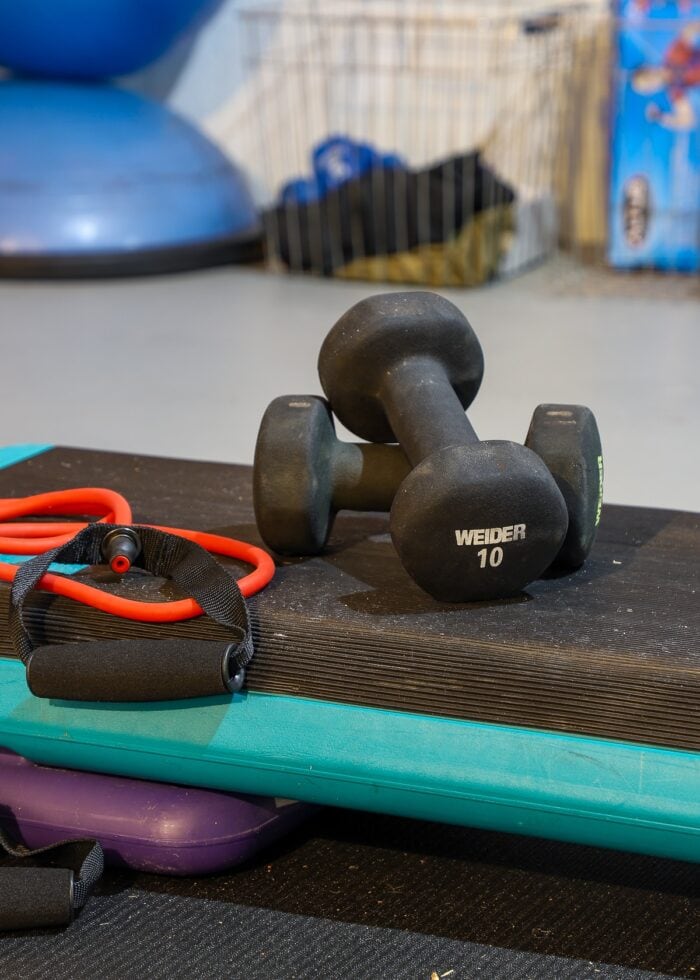
For years, I’ve known that my body needs HIIT exercise (high-intensity) and weight training. No amount of walking, biking, or Zumba keeps my weight in check. I kind of hate it, but that’s just the way I am built.
Once I acknowledged that and got back on the wagon with my usual workouts (2 days weights, 2 days HIIT), getting my weight back to my usual baseline (and keeping it there!) was quicker and easier.
In Summary
In summary, I’d offer this: if you’ve pre-judged (or been hesitant to try) a high-protein diet because it seems faddish or complicated, consider better-educating yourself on the benefits, risks, and research before you discard it forever.
It may not be for you (especially if you’re vegan, vegetarian, or don’t love meat!). But it also might change the way you fuel your body forever.
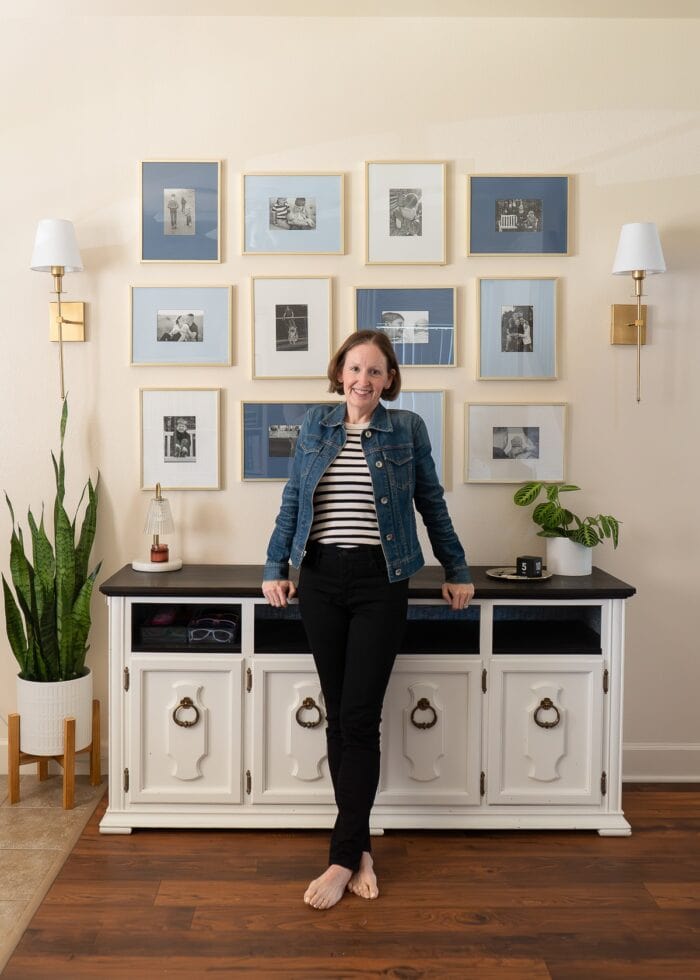
Megan


8 Comments on “Coffee Break #61”
Ok, this was super helpful. I’ve been feeling that higher proteins would help me, just the feeling full longer=less snacking. I also know my habits are not helping(like snacking when I sit). So this something I need to read up on and give it a try. Thanks for sharing!
Kudos and cupcakes to you, Megan!! I love that you educated yourself to the max before you started a new way of eating. Thanks for sharing your weight loss journey and resources. You look fantabulous!
My goal is to lose about 20 pounds, but my challenges will look quite different than yours. I’m 72 years old, which honestly means it’s going to be an uphill battle all the way! Once a woman’s estrogen levels reach rock bottom, it’s almost impossible to lose even a pound or two. However, I’m stubborn by nature and I’ve never been a quitter. Been doing a ton of research but so far, I haven’t found any answers as to effective ways to lose weight as a postmenopausal woman.
Good job. I added more protein and reduced the carbs a couple of years ago. At the time I was trying to reduce my inflammation to see if it would help my shoulder pain. I still needed minor shoulder surgery, but I realized I had lost eleven pounds in over a year. Once my shoulder is not stiff, I want to start strength training a couple of times a week. I still go to Zumba or Shine Dance Fitness a couple of days a week.
As a public service announcement, I love Megan no matter her size. However, I’m super proud of the discipline she showed along this journey!
I just turned 65 this January, and I started this exact same journey on Dec. 1st (rather than waiting till the New Year). I was also diagnosed with osteoporosis in the lumbar spine, and osteopenia in the hips after my bone scan in January.
To date, I’ve lost 15 pounds. I’ve been weight training three days a week, and walk every day between 7-10k steps. My scale says I’ve gained muscle in these last four months, which is my goal, because I want to be strong and I want to have balance as I age. My triglycerides, cholesterol and LDL numbers have all gone down too.
I haven’t used the My Fitness Pal app yet, but I will check it out today. Keeping all the macro numbers where they need to be IS a challenge.
I was skeptical about 100+ grams of protein per day, but I have to say I’m never hungry between meals and I never crave a later evening snack. All my life it’s been exercise like crazy and eat basically rabbit food (with zero results). That’s not sustainable and it’s not healthy. I’ve never eaten so much…seriously!
Great blog!
I feel like I’m reading my own story. Lol This was me five years ago but I’ve slacked on the eating but more the working out. I’m inspired again! I know what to do, I just have to do it! I’ll definitely check out the recipes you suggested. My go-to is Skinnytaste. She has great recipes that fit various diets but mainly high-protein and lower carb. Delish!! Thanks for this post!!
Very informative
And now you have to buy a new wardrobe again?!
Way to go!
This is all very helpful! I am glad to see that you shared and that you shared the reason/research you did before you started.