
How I Manage Pantry Backstock
I grew up in a household that always had too much food. The pantry was always full, and so was the fridge, the basement, and the downstairs freezer.
And not all of it was good food. Some was. But a lot of it was old, forgotten, expired. The unspoken rule when pulling anything from the fridge was to check it first for mold.
So it might not come as a surprise that I do NOT like to purchase food in bulk.
For years and years (and years!), Greg has asked me to have some backstock (so that we can at least make dinner if we miss our weekly grocery run). But I much prefer to keep on hand only the things we need for the week ahead and not too much more.
But in recent years, our lifestyle and eating habits (and budget!) have changed, and it became harder and harder to resist the convenience, price, and options at warehouse-style stores (e.g., Costco, Sam’s Club).
So after 20+ years of married life and 15+ years of Mom life, I finally acquiesced, and we got a Costco membership last year.
In the beginning, I was very slow to use it (because, if you can’t tell already…I hate hate hate having excess food stashed away.) But little by little, I figured out a realistic and manageable backstock storage system that allows us to buy (some items) in bulk and actually store and use them efficiently.
Here’s how I’m managing our household’s Costco backstock each month!
Decide What’s Worth Buying In Bulk
Just because Costco carries it in bulk, it doesn’t mean I need to buy it in bulk. Sure, sometimes the cost is better. But if our family can’t reasonably consume the bulk amount, we’ll ultimately lose money in waste and space.
It took me a little time and experimentation, but I now have a pretty good idea what we eat through fast enough to buy it at Costco and when a “normal” grocery-store size is adequate.
Identify a Place To Store Backstock
This one was definitely the most tricky for me. We don’t live in the biggest houses and are often short on pantry/closet/storage space.
But I had to find a way to store our backstock that was clearly out of the way but also always in eye sight so I can remember what we have on hand.
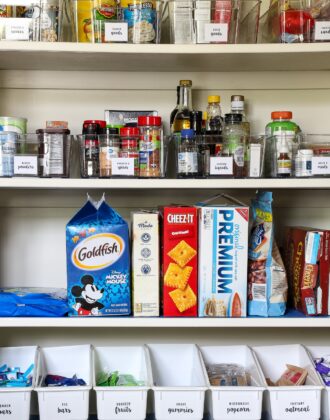
I noticed that we rarely put foods on the highest shelves in our pantries (because I can’t really reach that high). So it occurred to me that THAT was the perfect place for pantry backstock, because I don’t need to access that area often, but I can still see it all and get items down when necessary.
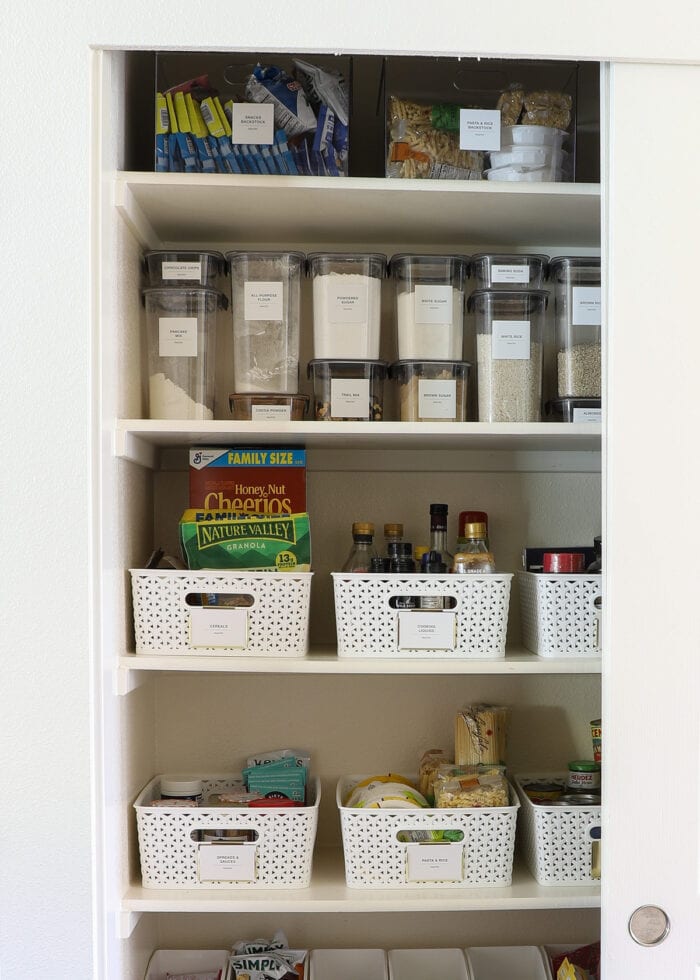
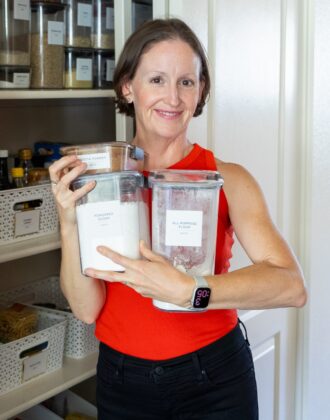
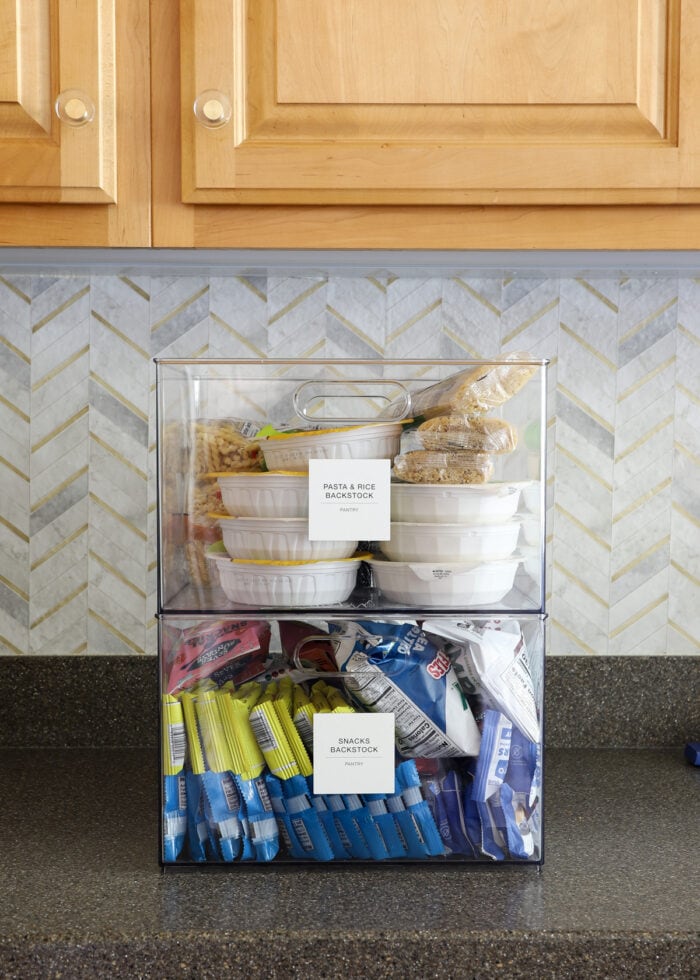
So I hunted for bins that would nicely fit on our pantry’s top shelf for the sole purpose of holding backstock, and I landed on these bins from Target.
I LOVE them for this purpose because they are clear (so I can see what we have on hand without pulling them down) and they are roomy enough to hold a lot.
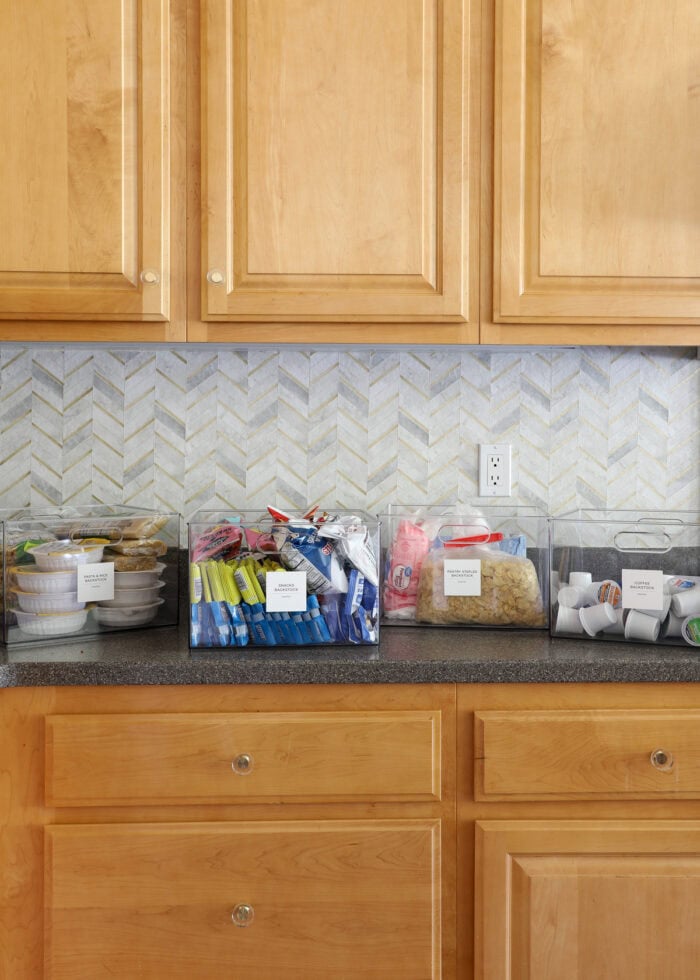
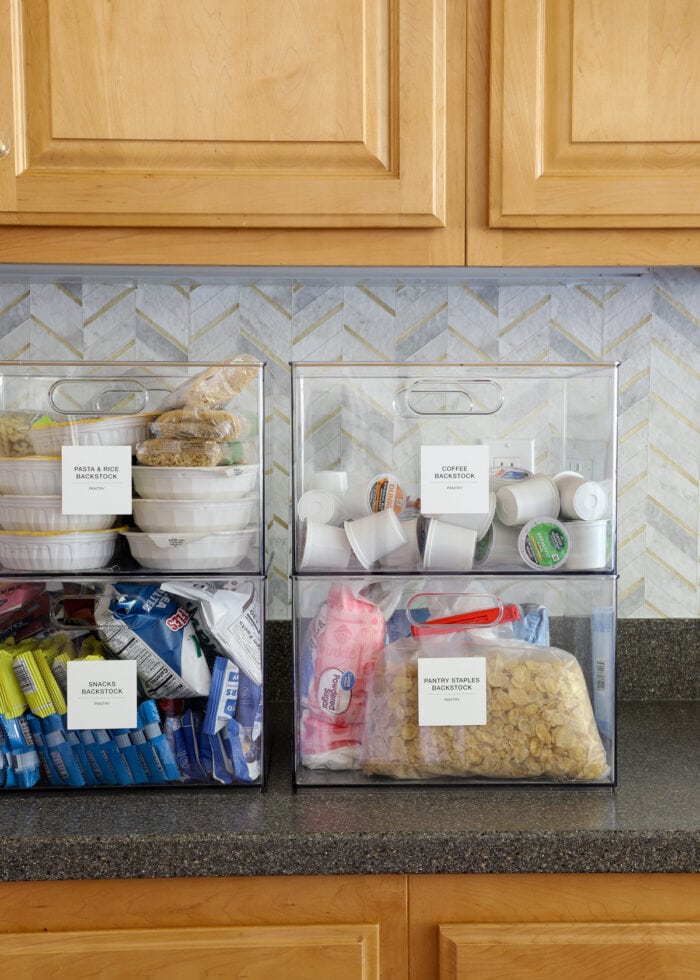
I have our bins sorted into Snacks | Pasta/Rices | Pantry Staples | Coffee because these are the main items I buy in bulk.
Want to save this post?
Now, when I bring a bulk grocery load home, I load what fits into our normal pantry baskets, and all the excess gets distributed into these bins.
UnBox Where Appropriate
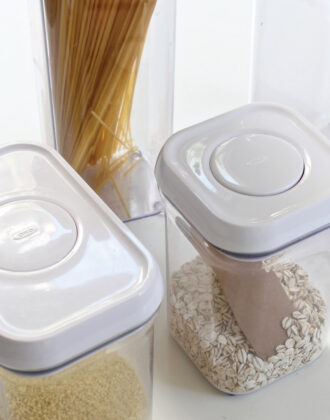
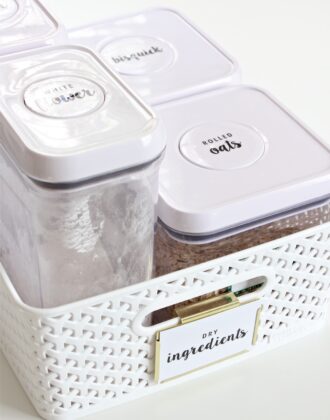
If you’ve been reading my blog for any length of time, you know I am a HUGE fan of pantry food decanting. And the main reason? To save space!
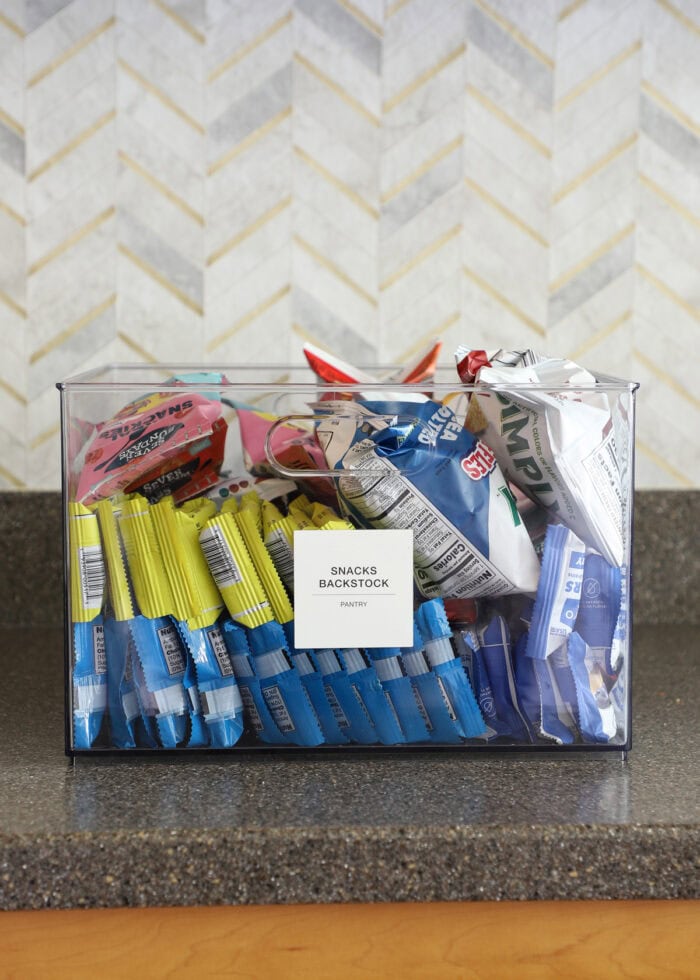
There is so much BULK in bulk shopping. So much space is taken up by cardboard boxes, wrapping, and other packaging. Removing this packaging, where appropriate, allows you to fit what you have into tighter spots or uniquely-shaped spaces.
And added bonus? When foods are taken out of their cardboard packaging, it’s MUCH easier to see how much you have on hand (instead of assuming a box is full only to discover that it’s empty!)
Shop Intentionally
We have to go into Costco with a pretty clear list of what we need and what we have space for.
I don’t have room for three different kinds of snack chips, so I pick one for that month.
I can only store so many bags of pasta, so I buy more only once we’re out.
Being intentional about what we need and what we have space for has allowed us to fight the “just throw it in the cart” approach, which usually just leads to buying stuff we can’t store.
Regular Re-Stock
When I am putting away the week’s groceries, I also pull down all our backstock bins and make sure everything is topped off for the week ahead.
This regular “re-stocking” eliminates having to pull the heavy bins up/down all week long and ensures I add anything running low to the following week’s shopping list.
Dive Deeper Into This Post
One of the trickiest aspects of adding a Costco membership was managing the sudden and mass consumption of packaged snacks by my kids (there’s so many on hand now!) In this week’s Voice Notes, I share the easy strategy I use to ensure our entire snack stash isn’t eaten through days after going to the store!
Megan